Wednesday, November 28, 2012

Transcendent Morality - Part I

A while back, Joe (other one of The Two Men) sent me the video below and asked what I thought. The video argues that morality should not be based on any kind of sacred text or other religious authority; I found it intriguing in couple of ways. One is because of a logic method we use where I work, in which we scrutinize fact vs. opinion, vet-out relevant vs. irrelevant data, track assumptions and clarify over-generalizations. We do this to find the root-cause of a problem, in other words, finding the truth. Besides this, it’s amusing to hear a voice in a British accent using big words, sounding smart, but saying nothing new when viewed from a Catholic perspective.


If God & religion are out, on what should our morality be based? The video answers the question while describing 6 different societies (interesting that it is “6” from a biblical standpoint). The society types outlined serve as examples, but they are also distractions. The video is really about a long litany of opinions, assumed relevancy and over-generalizations. The list below is what they claim morality should be based upon. Some clarifying questions immediately came to mind.

Ø  Improved Education: How do we know it is improved? What one may call good education another may call indoctrination. 

Education makes me SMRT
 
Ø  Valid Reasons: What is valid or not? Who will decide “validity”? How will it be measured?

Ø  Prohibiting Needless Harm: What is needless? What is harm? Could killing a healthy unborn child possibly qualify as needless harm? What is your opinion?
Healthy baby 8 weeks after conception
 
Ø  Avoid Pointless Suffering (euthanasia): Don’t some hardships make us stronger or make others around us stronger? Who determines “pointlessness”? How is it defined?

Ø  Recognizing Relevant Differences: Who determines what is relevant and on what is it based?

Ø  Identifiable Harm: How can we identify emotional or psychological harm? Where is the threshold and who will judge it?

Ø  Sufficient Justification: When is it sufficient? Who says so?

Ø  Accurate Information: Is it? Are you sure? How accurate?

Ø  My favorite…..Doing what is right and not what we are told to do: How do we know what it is “right”? The sweeping statements above will tell us?!?


In fairness, I’m sure one could write-up a similar post against some “religious video”. This is easy to do if we over-generalize ALL religions as ONE thing. Over generalization allows us to pick & choose whatever examples support our premises best, and ignore examples that do not. For instance, Catholicism holds that the universe is a created thing that is rational and orderly (like the creator) and should be studied, not worshipped like some past religions have done. This kind of thinking led us to formal scientific disciplines during the middle ages and beyond. In many ways Catholicism was a top contributor to western civilization, but there is no place for these examples in the above video.
What if we were to over-generalize atheistic thinking? Is the thinking of Joseph Stalin the same as Richard Dawkins? Is the morality of Mao Tse-Tung the same as Christopher Hitchens? I guess the point here is to separate & clarify our thinking, ask questions, demand specific answers, and understand the power of our premises. It’s OK to disagree, but not when we are unclear on what we disagree about. Speaking for myself, there are times when I actually prefer clarity over agreement.
Stay tuned for Part II on this in a week or so…


Monday, November 19, 2012

You Are a Thief and a Murderer

WARNING: The following might make you feel bad. For this reason you are not likely to hear it in a typical Sunday homily. It is based on a reflection I happened across from St. Bernard of Clairvaux; a doctor of the Church.

St. Bernard of Clairvaux
As is often the case, we need to start with the basics. Our souls consist of a will and an intellect. To love God is the highest act of the will and to know God is the highest act of the intellect. In this life, we can choose to move our will and intellect either toward God or toward “self”.

Are we really thieves? How can it be so? Since we were made by God and for God, we do not own ourselves. Therefore, when we commit acts of selfishness we are thieves who try to steal ourselves away from God. The only things we can truly claim ownership to are our sins and our vices.

How can we be murderers? Well, think about what murderers do. They kill a person and try to conceal the crime, perhaps by burying the victim in the ground. Likewise we too are murders, since we kill our souls, which is of far more value than our body. What do we do once we kill our souls? We try to hide the crime by burying our souls under mounds of filth. Gluttony, greed, addictions and perversions of every sort hide the fact that we are dead.  Even everyday “innocent” distractions like texting, gaming and Facebook can prevent us from seeing the crime that has happened.


To those “good” Catholics that never go to confession or maybe go once per year because they really don’t do anything “bad”. To those that firmly believe “I’m okay and you’re okay”……

Ø  Have you committed any selfish acts? Yes?
· You are a thief! Go to confession.

Ø  Have you committed the kind of sin that kills the soul? Yes?
· You are a murderer! Go to confession.

Ø Have you injured your soul with any type of sin at all? Yes?
· That is assault; you are an assailant! Go to confession.

Really….just go to confession, because I’m NOT okay and you’re NOT okay. As mentioned, you’re not likely to hear this in a Sunday homily because it is an unpleasant reality. There is a phrase we use at work to remind us of harsh realities and to express the emerging consequences thereof. We often say…. “You’ll have that”.


Friday, November 9, 2012

The Power of a Premise

The video below is a good example of the power of a premise. Whether good or bad, a premise is a powerful thing. The caller into the radio show is complaining about the location of deer crossings. She is asking why the department of transportation would allow deer crossings to be in such high traffic areas. Why would they encourage the deer to cross an interstate highway for example?  Why not have them cross at a lower traffic area like a school crossing? The caller is either a very confused woman (to put it kindly) or an exceptional actress. The premise at work is that the government can control where the deer go. If this were actually true, this would be a very reasonable and important conversation. As it is, the discussion is absurdly hilarious.


Here is one I’ll never forget from G.K Chesterton that I heard on EWTN. Imagine someone suffering from paranoia says to you, “Everyone wants to kill me.” You respond, “I don’t want to kill you."  The person answers, “Of course you would say that to keep your evil plan a secret.” There is logic there, but the premise is…well, insane.

PARANOIA
That unmistakable feeling  that everyone is out to get you.
How about this? Suppose I hold that inalienable human rights do not really exist objectively; they are only a concept evolving from subjective human opinion. With this premise it is reasonable to argue many monstrous things.


This won't hurt a bit.

For example, those that are very sick, very old or severely handicapped are a drain on the rest of society and should be terminated. You may use the term “euthanized” if it makes you feel better. Just think how much this could reduce health care costs! It is reasonable based on the premise.  G.K. Chesterton says, “A madman is not someone who has lost his reason, but someone who has lost everything but his reason”.


What does this have to do with faith? Someone once told me that Christianity requires faith because it could not be reasoned by the human mind; it is literally unreasonable. I responded that what is reasonable or unreasonable depends on the premises involved. If we say there actually is an all-powerful God that it is also all-loving, then we can say that this God could become a man if He wanted to, and there would be no limits to His love as God and man, even unto death, even death on a cross.
St. Paul reminds us about the resurrection as a premise for our faith in 1 Corinthians 15:14and if Christ has not been raised, then our preaching is vain, your faith also is vain.” To those who claim the resurrection is fairytale; a premise would be that those who claimed to be eye witnesses not only lied, but were willing to be ostracized from their Jewish community and brutally killed for the lie. Now that’s some stubborn liars. If I were lying, I’d be apt to say, “Never mind, we just made it up” long before the killing were to begin.
For the premise that there was not only no resurrection, but no God at all, we’ll need some other basic premises to explain the world around us. The complexity and order of our bodies, our minds, the earth and the entire universe ultimately come from nothing for the purpose of nothing. More specifically, come from nothing intelligent for no intended purpose.
Ø  From nothing comes something by its own power & direction.
Ø  From disorder comes order by its own power & direction.
Ø  From unconsciousness comes consciousness by its own power & direction.
Ø  From unintelligence comes intelligence by its own power & direction.
Now there’s a fairytale if I ever heard one.

Monday, October 29, 2012

The Common Language of Doubt

Don't you doubt me.

This is a post from June 2012 that was re-published when I was changing some things on the blog. I honestly don't know what happened; it suddenly appeared as the most recent post. Maybe someone needed to see this post today.  If not a miracle, I must have hit "publish" by mistake. Oh well....enjoy.

Here is another insight inspired by Professor Ratzinger from his book Introduction to Christianity and the scripture verse, “When they saw him, they worshiped, but they doubted.” (Matthew 28:17).


I remember having a metaphysical discussion with a secular friend about morality. The question in play was, “Does morality actually exist?” He answered, “Yes, but it’s only a concept.” I paused a moment and said, “Are you comfortable teaching your kids that?” I could see the doubt creeping into his eyes as he answered, “No.”

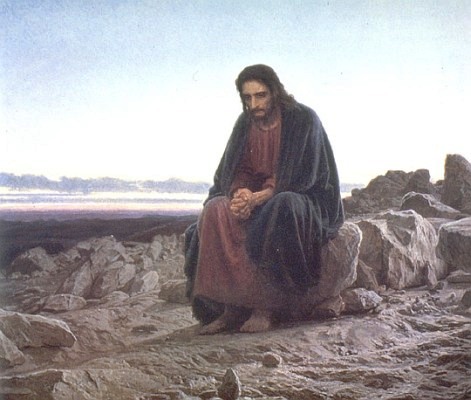
Doubt is something we all relate to. From the Twelve who walked with Jesus, to some of the greatest saints, to the most orthodox atheist, doubt is a part of our reality. It would be very strange if a finite being with a finite mind never experienced doubt. In fact, I’d say having absolutely no doubts at all might be a clear sign of insanity.

Here are some thoughts paraphrased a bit from Introduction to Christanity, chapter 1, Belief in the World of Today…

Just as the believer can have reservations about his faith, the nonbeliever is troubled by doubts about his unbelief; about the real totality of the world he has made-up in his mind to explain as a self-contained whole. There is no escape from the dilemma of being man. Anyone who makes up his mind to evade the uncertainty of belief will have to experience the uncertainty of UNbelief.

The rivalry between doubt and belief, temptation and certainty exists for all of us. Perhaps this way of doubt, which saves both sides from being shut up in their own worlds, could become an avenue of communication. It prevents both sides from enjoying complete satisfaction; it opens up the believer to the doubter and the doubter to the believer. For one, it is his way of sharing in the fate of the unbeliever; for the other, the form in which belief remains a challenge to him.

Belief has an adventurous “risk-leap” about it and it is helped by our own effort and will. Like John the Baptist we ask, “Are you really He, or shall we look for another?” We pose the question not only out of intellectual honesty & reason’s responsibility, but also in accordance with the interior law of love, which wants to know more and more about Him to whom it has given its “Yes”, so as to be able to love Him more.

Are you really He?

Tuesday, October 23, 2012

Sacrifice and the Greater Good

Today on relevant Radio, I listened for a short time and heard Fr Rocky answer a question regarding the difference between the heart, spirit and soul in relation to the body and mind.

He deftly gave the clear Thomist answers but then took it a step further.  He said that the soul (or spirit) is the differentiator that gives humans reason and free will.  Two of the faculties of the soul are the intellect (mind) and the will (often synonymous with the heart).


(Here is the archive link.)


Here's where he develops it further.  Religions usually contain some form of sacrifice.  As we look at religion with all its varied acts of sacrifice, the highest sacrifice is the Sacrifice of the Mass.


As Catholics we employ sacrifice all the time.  Fasting is the sacrifice of the body desire to eat.  Celibacy is the sacrifice of the sexual urge.  These sacrifices exercise our self-control.


How does this relate to the Will and the Intellect?


The sacrifice of the Intellect is Faith.  The Intellect is the striving to know.  To discover and to contain all it can find.  It is a temptation of the Intellect to believe ONLY what it can apprehend (through the senses).  Conversely, the logical fallacy is that if it is not sensible, then it does not exist.   Faith then, is letting go of knowing only what I can perceive.  It is the accepting of knowledge GIVEN to me rather than acquired by me.  It is other-centered and trust-based.


The sacrifice of the Will is Obedience.  The Will is the choice maker, the part of me that decides whether to do this or that.  The temptation of the Will is to be the captain of my own destiny.  To decide that MY wishes are the ends towards which the whole world ought to work.   Obedience then, is the letting go of my wants and desires.  To act as if another's wishes are actually mine.  To make their goals, my goals and their tasks, mine.  Again, it is other-centered and trust-based.


The sacrifice of the Heart is Love.  Since Love is a decision, you love from the Will.  You decide whether to love someone or not.  The temptation is to treat love as an emotion and love when you feel like it and refrain from loving when you do not.  Love then, is the letting go of whether the person is lovable, and loving them anyway.  Deciding to act loving when it's not merited, deserved or even wanted is to truly Love.


What I see from this wonderful insight is that the act of sacrificing something is an indicator of the intrinsic value of the thing sacrificed.  Food, sex, knowledge and choice, are all powerful and GOOD.  Practicing the sacrifice of them makes us better, and orients us toward the ultimate Good, God.


Friday, October 19, 2012

An Election Appraisal

Here is one more election related post that may have little to do with faith, but a lot to do with reason. There is a logic method I teach where I work called Situation Appraisal. Its purpose is to sort out priority concerns and it answers the question “What is going on?” It can help a confused Catholic voter sort out and prioritize many issues at once (at least for themselves). Here is how it works with an everyday example:

Step 1: List any concerns as vague as you want.
Ø  Every day example: I hate my car

Step 2: Separate & Clarify:
We ask questions to restate unclear concerns into specific elements to help minimize/alleviate over-generalizations and rationality overloaded by feelings. Whether questioning another or yourself, remember that the goal is NOT to solve a problem; the goal is to bring clarity. Any concern should be questioned until it is difficult or even impossible to give it more than one meaning. This is done with probing, open questions like “why”, “what do you mean by”, “what concerns you about”, “what else”.

Ø  I hate my car (this can mean many things)
- Why?
            - It doesn’t work well.
- What’s wrong?
            - It vibrates at highway speeds
- What else?
            - It’s bad on gas mileage
- What else?
            - That’s it.

“I hate my car” was separated & clarified in to two specific concerns; a vibration that happens at highway speed & poor gas mileage.

Step 3: Consider Current Impact, Future Impact and Time Frame
For each clarified concern we ask, what is the current impact or seriousness? What is the future impact or growth (or what is likely to happen if nothing is done)? What is the time frame or urgency (when does it become too late)?

Concern
Current Impact
Future Impact
Time Frame
Car has vibration at high speed
It’s annoying
Vibration will destroy my new tries
A few weeks until the tires are destroyed
Car has poor gas mileage
Spending $40/mo too much on gas
Going into debt $40/mo
6 months until out of extra money

Step 4: Make a Comparative Evaluation.
Compare & prioritize each column one at a time, and then look at all three columns at once for the big picture.

Concern
Current Impact
Future Impact
Time Frame
Result
Car has vibration at high speed
Annoying
LOWER
New tires destroyed
HIGHER
A few weeks
HIGHER
2 Higher
1 Lower
Car has poor gas mileage
 
Spending $40/mo too much on gas
HIGHER
 
Going into debt
LOWER
 
6 months
LOWER
1 Higher
2 Low

The car vibration issue becomes the top priority concern since it was given 2 highs and 1 low, so we address this concern first.
This same kind of logic can be applied to a Catholic considering election issues:
PLEASE NOTE: This is only an example of hypothetical voter opinion.
Step 1: List any concerns:
Ø  Life Issues
Ø  Religious Liberty
Ø  Social Justice
Step 2: Separate & Clarify:
Ø  Life Issues
- What specific life issues concern you?
            - Abortion & Death Penalty
- What else?
            - That’s it
- What’s concerns you about abortion?
            - That it is legal. Abortion should be illegal.
- What concerns you about the death penalty?
            - God is the author of life, so the death penalty should be outlawed.

Ø  Religious Liberty
- What is your religious liberty concern?
            - HHS Mandate will cause Catholics to violate their conscience or be fined.
- What else?
            - That’s it.

Ø  Social Justice
- What concerns you about this?
            - Healthcare
- What about healthcare?
            - Many Americans can’t afford insurance.
- What else concerns you about Social Justice?
            - Nothing else.
 
“Life Issues” was separated & clarified into two specific concerns; legalized abortion & the death penalty. “Religious Liberty” was clarified to the HHS mandate. “Social Justice” was clarified to healthcare coverage for those who cannot afford it.

Step 3: Consider Current Impact, Future Impact and Time Frame
Concern
Current Impact
Future Impact
Time Frame
Legalized Abortion
Over 1 million babies killed per year (U.S.)
Over 1 million more killed per year, every year
No specific time limit
Death penalty
<50 executions per year in recent years
About 50 more per year, every year
No specific time limit
HHS Mandate
Law suits taking time & money
Many Catholic Institutions forced to close. Higher cost to government to fill the gap
A few years for the full impact
Healthcare for the poor
Tens of millions do not get basic care
Preventable sicknesses left unchecked cause suffering & higher healthcare cost
No specific time limit

Step 4: Make a Comparative Evaluation
Concern
Current Impact
Future Impact
Time Frame
Result
Legalized Abortion
Over 1 million babies killed per year (U.S.)
HIGH
Over 1 million more per year, every year
HIGH
No specific time limit
LOW (none)
2-High
0-Med
1-Low
Death penalty
<50 executions per year
MEDUIM
About 50 more per year, every year
LOW
No specific time limit
LOW (none)
0-High
1-Med
2-Low
HHS Mandate
Law suits taking time & money
LOW
Many Catholic Institutions forced to close. Higher cost to government to fill the gap
MEDIUM
A few years to feel the full impact
HIGH
1-High
1-Med
1-Low
Healthcare for the poor
Tens of millions do not have health insurance
MEDUIM
Preventable sicknesses left unchecked cause more suffering & higher healthcare cost
HIGH
No specific time limit
LOW (none)
1-High
1-Med
1-Low

So for this hypothetical voter, abortion becomes the top priority concern, followed by the HHS mandate & healthcare coverage with the death penalty coming in last. The voter can then compare a candidate’s position to these priorities.

A full list of clarified election issues would be much longer than in our example, but it is hard to imagine any concern that has a greater current & future impact than the slaughter of over one million innocent lives this year and every year. Even if we added in the concern of over 20 million unemployed people, at least they are alive and have the legal right to remain so. Of course, the spiritual impact of a nation that allows this kind of killing is difficult to measure even in a detailed appraisal like this.

Remember that the purpose of Situation Appraisal is NOT to actually solve the concerns; it is meant for clarity. Clarity of thought and prioritization brings focus to any state of affairs, no matter how complex. Using an appraisal like this in the context of our faith can give us true clarity to act by the reality of things, and there is a word that describes acting by the reality of things very well; that word is…“sanity”.